
When the Crypto Casino Stops Paying Out
Coinbase Global is set to report second-quarter earnings to investors who arrived with a particular expectation: that retail volatility would smooth out, that institutional adoption would provide ballast, and that the exchange's revenue would stabilize into something resembling a traditional financial utility. The early signals suggest otherwise.
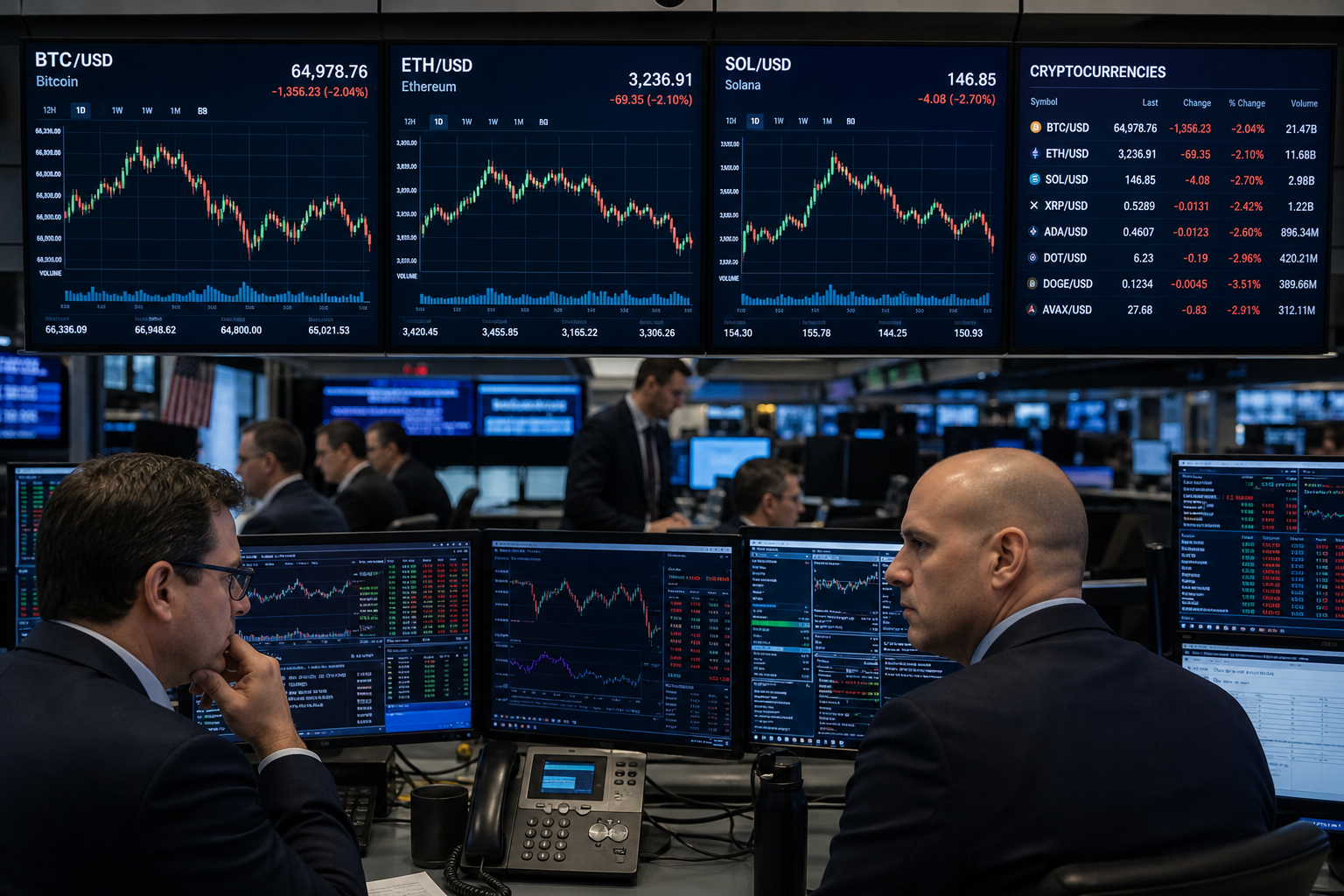
Spot trading volumes—the bread and butter of retail and institutional trading alike—have declined measurably entering Q2. This matters because it punctures a narrative that has become central to how Wall Street values Coinbase: the idea that crypto markets have matured beyond the speculative binges of past cycles and are now generating steady, predictable cash flows.
The Volume Problem Is Not New
Anyone who has watched crypto through multiple market cycles understands the pattern. After sustained rallies, trading activity cools. Retail traders lock in gains or absorb losses and step back. Institutional capital, despite years of promises about integration into hedge funds and pension portfolios, remains lumpy and event-driven rather than constant. Spot trading volume is cyclical in ways that Wall Street equity markets have trained investors to overlook.
Coinbase built a business model on the back of that volatility. Trading fees—whether from spot or derivatives—represent the largest component of quarterly revenue in bull markets. When markets flatten or drift downward, fee pools shrink. The company has attempted to diversify: custody services, staking, loan products, and subscription offerings all represent bets that crypto could become boring and profitable in the manner of traditional financial infrastructure.
The problem is that those revenue streams remain immaterial relative to trading fees. And they depend on either regulatory clarity that has not materialized or user adoption at scales that remain elusive.
What Wall Street Expected to Hear
Institutional investors and equity analysts came into 2024 expecting Coinbase to demonstrate that crypto volatility had been replaced by something more resembling the steady-state revenue models of incumbent exchanges. CME Group and Nasdaq had shown that derivatives trading could produce reliable quarterly earnings. Bitcoin's halving cycle and the approval of spot Bitcoin ETFs created a plausible narrative: that retail would be replaced by large allocators, that trading would shift from frenzied speculation to calm portfolio rebalancing, and that Coinbase could graduate from a volatile small-cap into a stable financial utility.
Q2 trading activity suggests that story is not unfolding on schedule. Spot volumes declined. That is not a disaster—it does not mean the company is failing or that crypto markets are broken. It means that the expectations baked into the stock price may have been calibrated to a growth trajectory that is not occurring.
The Derivatives Question
One partial offset is derivatives trading, which has expanded as retail and institutional traders have become more sophisticated in their hedging. Coinbase's derivatives volumes have grown, and the margin profiles are different—they can produce higher per-trade revenue than spot. But derivatives also carry regulatory uncertainty. The SEC and CFTC continue to debate jurisdiction. Products that seemed secure six months ago can face sudden compliance questions. A business model that leans too heavily on derivatives revenue inherits that regulatory risk.
This is where the conservative case for caution enters. Coinbase is not a company that can ignore regulatory signals. It is among the most regulated crypto exchanges in the United States, by choice and by necessity. It holds banking relationships. It files with the SEC. That architecture provides stability, but it also means that revenue models are subject to policy shifts that are not in the company's control.
The Valuation Reset
Analysts are beginning to model Coinbase more like a traditional exchange—cyclical, dependent on trading volume, and vulnerable to macro interest rate movements. That is a more honest model than the growth narrative that dominated 2023 and early 2024. It is also a less favorable one for equity investors who were promised crypto exceptionalism.
The stock is likely to face pressure ahead of earnings and potentially after, regardless of management commentary. Wall Street tends to punish companies that fail to deliver on the story that justified their valuation, and Coinbase carried a story that spot trading would remain robust through a full market cycle. The data does not support that claim so far.
The Deeper Problem: Adoption Without Utility
Beneath the earnings mechanics lies a harder question: What problem does Coinbase solve that justifies its valuation and growth premium over traditional exchanges? For spot Bitcoin and Ethereum, the answer is less clear than it was three years ago. Those assets have matured from pure speculation into allocations that some serious investors hold, but the trading volume per unit of price appreciation has declined. Users trade less frequently. The per-transaction fee pool has shrunk relative to the size of holdings.
Coinbase executives will likely frame Q2 results with emphasis on staking services, which have grown, and on the long-term potential of crypto adoption. That is not false. But it is also not what Wall Street is paying for in the near term. Equity investors fund companies on the basis of near-term cash flow improvement and visibility into future cash flows. Coinbase is offering neither in abundance.
What Conservative Investors Should Watch
The Q2 earnings call will reveal details on customer acquisition costs, custody asset growth, and management guidance for H2 2024. Pay attention to whether the company is preparing investors for lower trading volumes as a new baseline or whether they still expect cyclical recovery. That distinction will shape expectations for valuations going forward.
Watch also for any commentary on regulatory policy. Coinbase has been careful to position itself as the compliant player in crypto. That positioning is an asset in regulatory negotiations, but it is also a constraint. If the company appears to be accepting more restrictive interpretations of which products it can offer, that suggests regulatory headwinds are intensifying.
Coinbase remains a legitimate business. It serves a real market, it holds customer assets responsibly, and it is profitable. The question is not whether the company is viable but whether it is worth the premium valuation that the crypto boom assigned to it. Q2 earnings will provide data for that recalibration, and the data appears to be moving in a direction that equity analysts did not expect.