
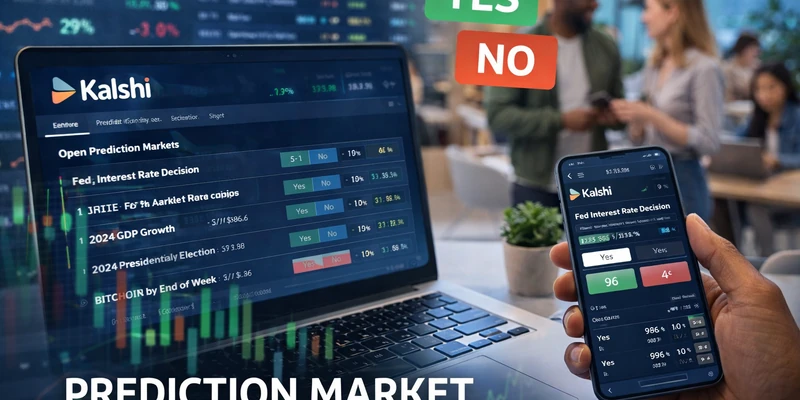
Prediction market platform Kalshi is reportedly seeking to raise fresh capital at a valuation of around $22 billion—roughly double its most recent valuation—according to Bloomberg.
The potential step-up underscores the rapid momentum behind event-based trading platforms, which have surged in popularity across retail and institutional audiences. Kalshi, which allows users to trade on the outcomes of real-world events ranging from elections to economic data and sports, has been one of the primary beneficiaries of that trend.
The company was last valued at approximately $11 billion following a late-2025 funding round. Kalshi’s growth has been fueled by expanding trading activity and broader adoption of prediction markets as an alternative asset class. These platforms enable users to take positions on future outcomes, effectively blending elements of financial markets and betting.
The company has also benefited from its regulatory positioning in the United States, where it operates as a federally regulated exchange—an advantage over some competitors that have faced legal uncertainty or geographic restrictions.
Investor enthusiasm for the sector has accelerated alongside rising trading volumes and revenue projections. Kalshi is reportedly generating a revenue run rate in the billions, reflecting strong user engagement and increasing liquidity across its markets.
Kalshi’s valuation push comes amid intensifying competition with rival platform Polymarket, as both firms race to capture market share in what is quickly becoming a high-growth segment of fintech.
Both companies are exploring fundraising at valuations near or above $20 billion, signaling investor confidence but also raising questions about sustainability and regulatory oversight.
At the same time, lawmakers and regulators are beginning to scrutinize prediction markets more closely, particularly around sensitive topics such as political events and geopolitical outcomes. If completed, the new funding round would position Kalshi among the most valuable startups in the broader financial technology and alternative trading space.
More broadly, the deal would reinforce a growing narrative: prediction markets are transitioning from niche products into mainstream financial infrastructure—though regulatory clarity and long-term market dynamics remain key variables.